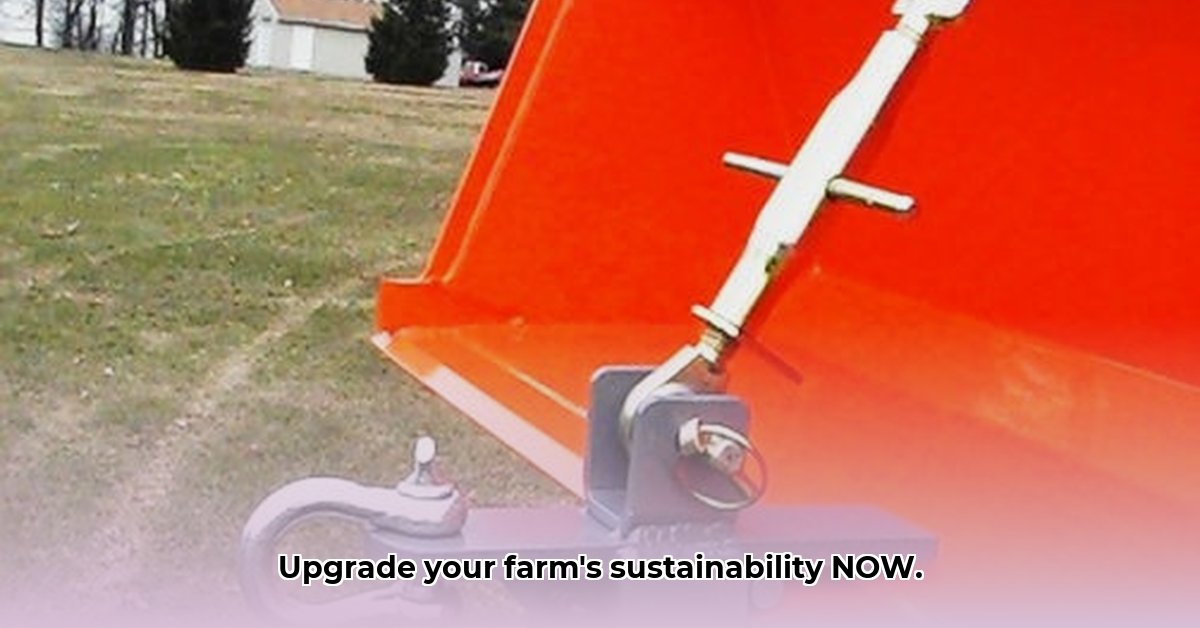
Tractor Hitch Balls: A Foundation for Sustainable Farming
Choosing the right tractor hitch ball may seem insignificant, but it significantly impacts your farm's efficiency and sustainability. This seemingly small component acts as a crucial link between your tractor and implements, affecting fuel consumption, soil compaction, and overall operational efficiency. A well-chosen hitch ball translates to direct cost savings and environmental benefits. This guide provides actionable steps and critical knowledge to select and maintain the optimal hitch ball for your sustainable farming practices. For more information on hitches, see this helpful guide on tractor hitches.
Matching Your Hitch Ball to Your Needs: Ensuring the Right Fit
Before purchasing a hitch ball, meticulously assess your towing needs. Mismatched hitch balls risk equipment damage and safety hazards. Here's a step-by-step process to determine your requirements:
Inventory Your Implements: List all towed implements (plow, planter, sprayer, etc.) and their respective weights (usually found in owner's manuals).
Consult Your Tractor's Specifications: Your tractor's manual specifies its maximum towing capacity. Never exceed this limit; doing so is dangerous and can cause significant damage.
Consider Material and Durability: Steel is standard, but stronger, lighter alloys offer improved durability and fuel efficiency. Longer-lasting materials reduce waste and replacement costs, contributing directly to sustainability. A high-quality hitch ball represents a long-term investment that reduces overall operational costs and minimizes environmental impact. Isn’t investing in durable, long-lasting equipment a smart decision for your farm´s sustainability?
Deciphering Hitch Ball Options: Sizes, Types, and Mounts
Hitch balls vary in size, type, and mount. Selecting the correct combination is crucial for safe and efficient operation:
Size: Hitch ball sizes are measured in inches (e.g., 1 7/8" or 2"). The hitch ball size must precisely match the receiver on your towed implement.
Mount Types: Three primary mount types exist:
- Fixed Mounts: Simple, reliable connections best suited for implements requiring minimal maneuverability.
- Adjustable Mounts: Allow height adjustment for varied implements, increasing flexibility.
- Swivel Mounts: Enable swiveling, beneficial for tight spaces or uneven terrain, enhancing maneuverability and reducing equipment stress.
Material Selection: While steel is common, consider higher-strength, lighter alloys for improved fuel efficiency and reduced wear. How much fuel do you think you could save annually with a lighter-weight hitch system? This question should highlight the advantages of using alloys.
Investing in Durability: The Long-Term Sustainability Advantage
While an initial investment in a high-quality hitch ball may seem costly, its longevity results in significant long-term savings. A durable hitch ball minimizes replacements, reducing waste and downtime. This directly contributes to a more sustainable and economically efficient farming operation. What’s the long-term cost of constantly replacing worn-out hitch balls versus a single, high-quality investment?
Minimizing Soil Compaction: Protecting Soil Health
Excessive soil compaction reduces crop yields. Heavy equipment, especially with improper hitching, contributes to this problem. Compacted soil impairs drainage and root growth.
| Factor | Impact on Soil Compaction | Sustainability Implications |
|---|---|---|
| Hitch Ball & Implement Size | Larger/heavier combinations increase compaction. | Proper sizing minimizes compaction, improving soil health. |
| Soil Moisture | Wet soil compacts more easily than dry soil. | Avoid working wet fields; proper timing reduces compaction. |
| Tillage Practices | Intensive tillage compacts soil more than no-till methods. | Reduced tillage practices minimize compaction and improve soil structure. |
Maintenance: Preserving Hitch Ball Functionality
Regular maintenance is critical for optimal hitch ball function and longevity. Regularly inspect for wear, cracks, or damage. Lubricate moving parts to ensure smooth operation. Proactive maintenance prevents costly repairs and extends the lifespan of your equipment, reducing waste and reinforcing your sustainable practices. How often do you currently inspect your hitch system – and how frequently should you check your hitch ball for wear and tear?
In conclusion, the seemingly minor detail of choosing the right tractor hitch ball significantly impacts the sustainability and efficiency of your farming operation. By following these guidelines, you can optimize your equipment, reduce costs, protect your soil, and contribute to a healthier environment.